New paper calls for urgent conversation on impact of disciplinary investigations across UK workforce
HPMA is pleased to support a new discussion paper published by The Faculty of Public Health today (13 July) warning that the way disciplinary investigations are conducted across the UK workforce is causing predictable, preventable and widespread harm and should now be recognised as a public health issue.
Reducing harm from the poor application of disciplinary processes: a public health issue sets out how poorly designed and applied procedures are damaging staff wellbeing, weakening workforce resilience and undermining organisational effectiveness across sectors.
Julie Rogers, CEO of HPMA, said: “I welcome this new focus from the Faculty of Public Health and their call to consider the impact of disciplinary processes as a public health issue. They certainly cause harm well beyond the healthcare sector and this is an opportunity to engage employers across the wider UK workforce.”
1.7 million formal disciplinary cases every year
Acas estimates that UK organisations initiate 1.7 million formal disciplinary cases every year, with workplace conflict costing employers £28.5 billion annually. Nearly 80% of this cost is linked to dismissals and resignations arising from formal procedures.
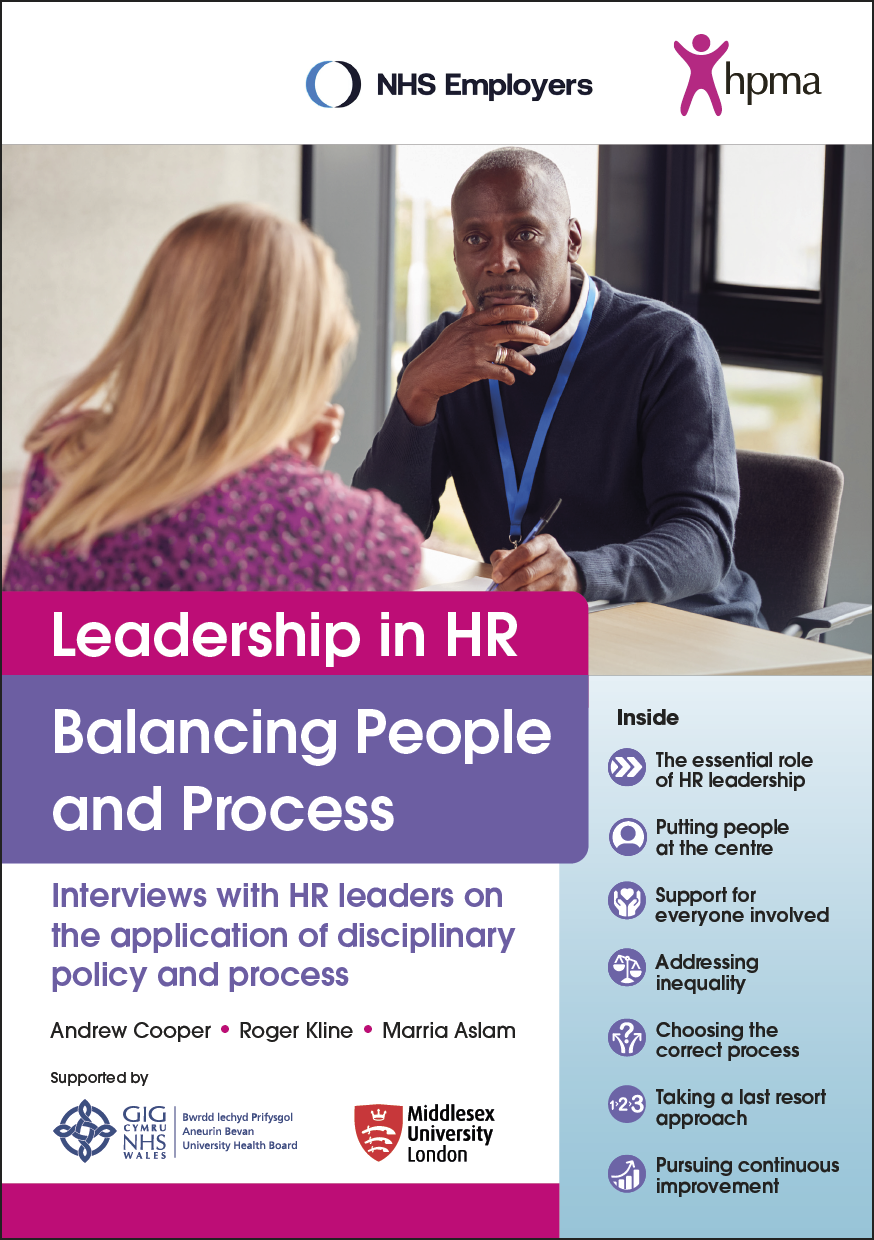
Andrew Cooper, Programme Director for HPMA’s Avoiding Harm programme is an author on the paper and said: “The harm caused by poorly applied disciplinary processes is not incidental, it is built into the way many systems currently operate. We need approaches that are proportionate, compassionate and rooted in learning.”
The Faculty for Public Health is calling for a national conversation on how disciplinary processes are designed, delivered and regulated, urging organisations to adopt approaches that protect wellbeing, strengthen trust and support effective services.
Professor Tracy Daszkiewicz, President of the Faculty of Public Health, said, “For too long, we have prioritised procedure over people, and the widespread harms caused by poorly
considered disciplinary processes are preventable.
“Just as public health has reframed issues like smoking, obesity and vaccination as population-level priorities, there is now an opportunity to do the same for workforce wellbeing.”
HPMA’s Avoiding Harm programme
The paper builds on HPMA’s Avoiding Harm programme, which introduced the concept of avoidable employee harm. While the programme has informed improvements in several NHS organisations, the evidence shows the issue extends far beyond healthcare, affecting government, education and the private sector.
The paper calls for coordinated action across the system, including:
- Policymakers and regulators: to recognise disciplinary practice as a determinant of workforce wellbeing and strengthen safeguards.
- Employers: to invest in compassionate, proportionate approaches and prioritise early, fair resolution.
- HR professionals: to shift from compliance-driven processes to human-centred practice.
- Public health professionals: to embed workforce wellbeing within public health priorities and advocate for reform.
‘Reducing harm from the poor application of disciplinary processes: a public health issue’ is available on the Faculty of Public Health website.
https://www.fph.org.uk/media/dcrkfiqy/f010726-fph-discussion-paper-disciplinary-processes.pdf