A Blog by HPMA Chief Executive, Julie Rogers
“I realise that I’ve made decisions – often driven by the process and training – which failed to consider the person at the heart of the investigation…”
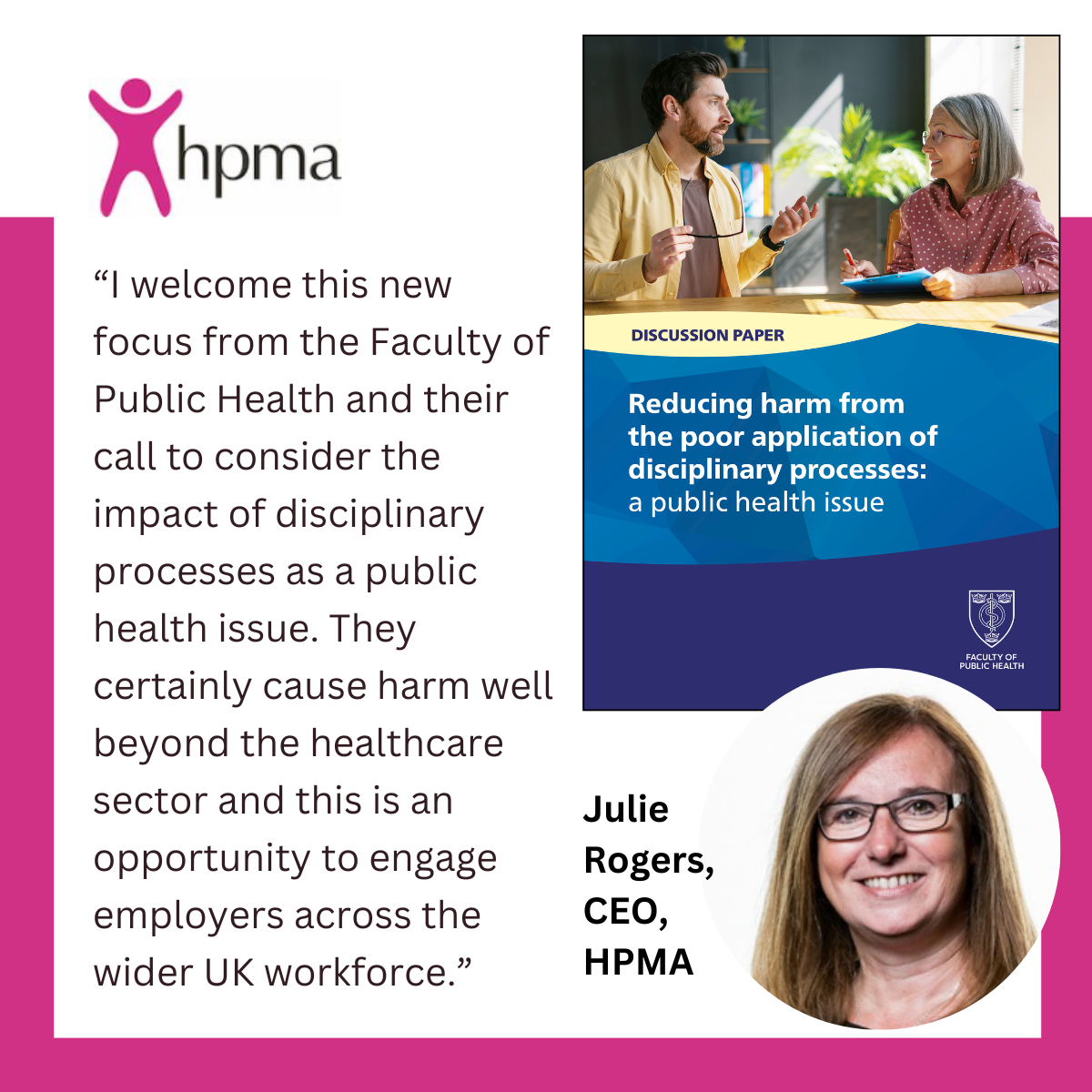
I wrote these words for the introduction to the “When we do harm” discussion paper, which we published last year on improving our employee investigations.
The response to the paper has been excellent. We aimed to start 100 conversations and we’ve achieved well over that number. That’s HR colleagues thinking differently, asking questions of the processes we manage and working on more compassionate, effective and less costly ways to run them.
Some of my colleagues have asked about my personal experience: would I say more about the decisions I referred to in the introduction?
My first disciplinary
It was the first time I was required to take an employee through a formal disciplinary process.
When his managers referred the individual to me, they described him as disengaged and unable to cope with his work. My task was to dismiss him and to make sure that there was no costly employment tribunal in the process.
It was my first HR job as a business partner, working alongside four other HR professionals. We had all been trained to take a legalistic approach and were measured by the way we removed unwanted colleagues without fuss and cost.
At the time, I was uncomfortable about the way we managed these processes. We weren’t encouraged to consider what may have led to the situation, or what the wider issues might have been – or even to reflect on the employee’s previous record. It was problem solving, rather than people-solving.
This was further highlighted by the way in which we were taught to apply the highest possible sanction and work down from there. And if the allegation could potentially be gross misconduct, the policy was to suspend them.
It was difficult to know how to take a different approach to managing and supporting staff through these processes. I didn’t have the experience or confidence to challenge the existing practice, even though I felt that something was missing.
Sadly, I discovered afterwards that the employee being taken through the disciplinary had recently gone through a major organisational change programme. He had been poorly supported during the process and been left unprepared and frightened by the new requirements of the role he was now in. I found this out too late to be able to do anything. He left the organisation in a terrible state.
Looking back – the need for a compassionate approach
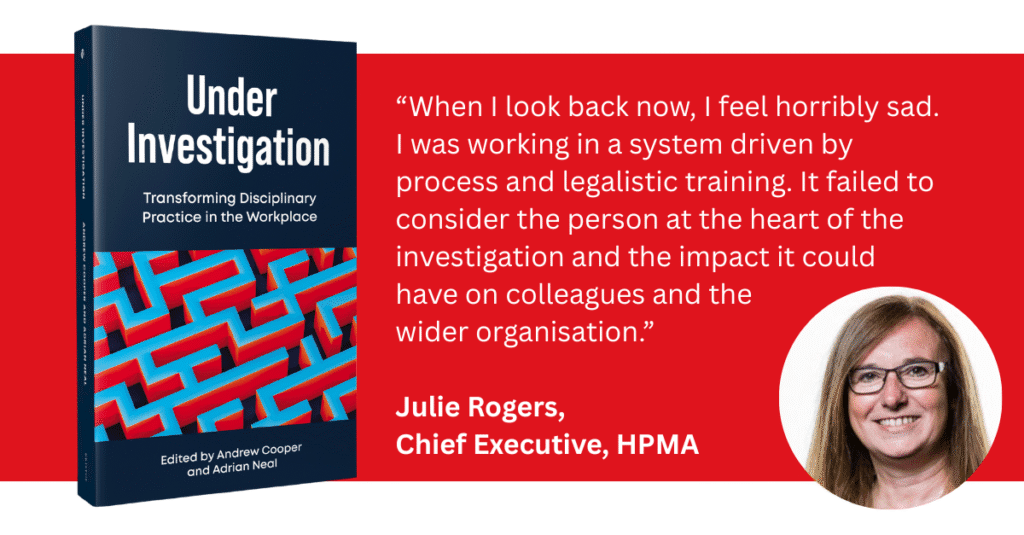
When I look back now, I feel horribly sad. I was working in a system driven by process and ‘legalistic training. It failed to consider the person at the heart of the investigation and the impact it could have on colleagues and the wider organisation.
A compassionate approach can make a world of difference to someone’s experience of the process, but also their future working life. This includes being prepared to ask the questions that aren’t being asked when we are presented with a case and ensuring that there is regular communication in place with someone who is suspended or on sick leave, so that they don’t feel isolated and abandoned.
We need to lead the change
Whilst my experience took place early in my career and several decades ago, I still see it happening today. As a profession, we need to lead the change in how processes are managed and run to better look after those being taken through them.
This is one of the objectives of our #AvoidingHarm programme.
It’s also one of the principal objectives of a new book which started with evidence found in the NHS.
‘Under Investigation: Transforming Disciplinary Practice in the Workplace’ is edited by Andrew Cooper and Adrian Neal and is published by Bristol University Press. I was privileged to write the final chapter together with David D’Souza of the CIPD. It’s a call to action to our profession.
If you are attending our Birmingham conference, you’ll be given a free copy of the book in your conference pack. If you can’t be there or if you need further copies for your colleagues, it can be ordered here [ Bristol University Press | Under Investigation – Transforming Disciplinary Practice in the Workplace ] and from all good bookshops. The RRP is £19.99.